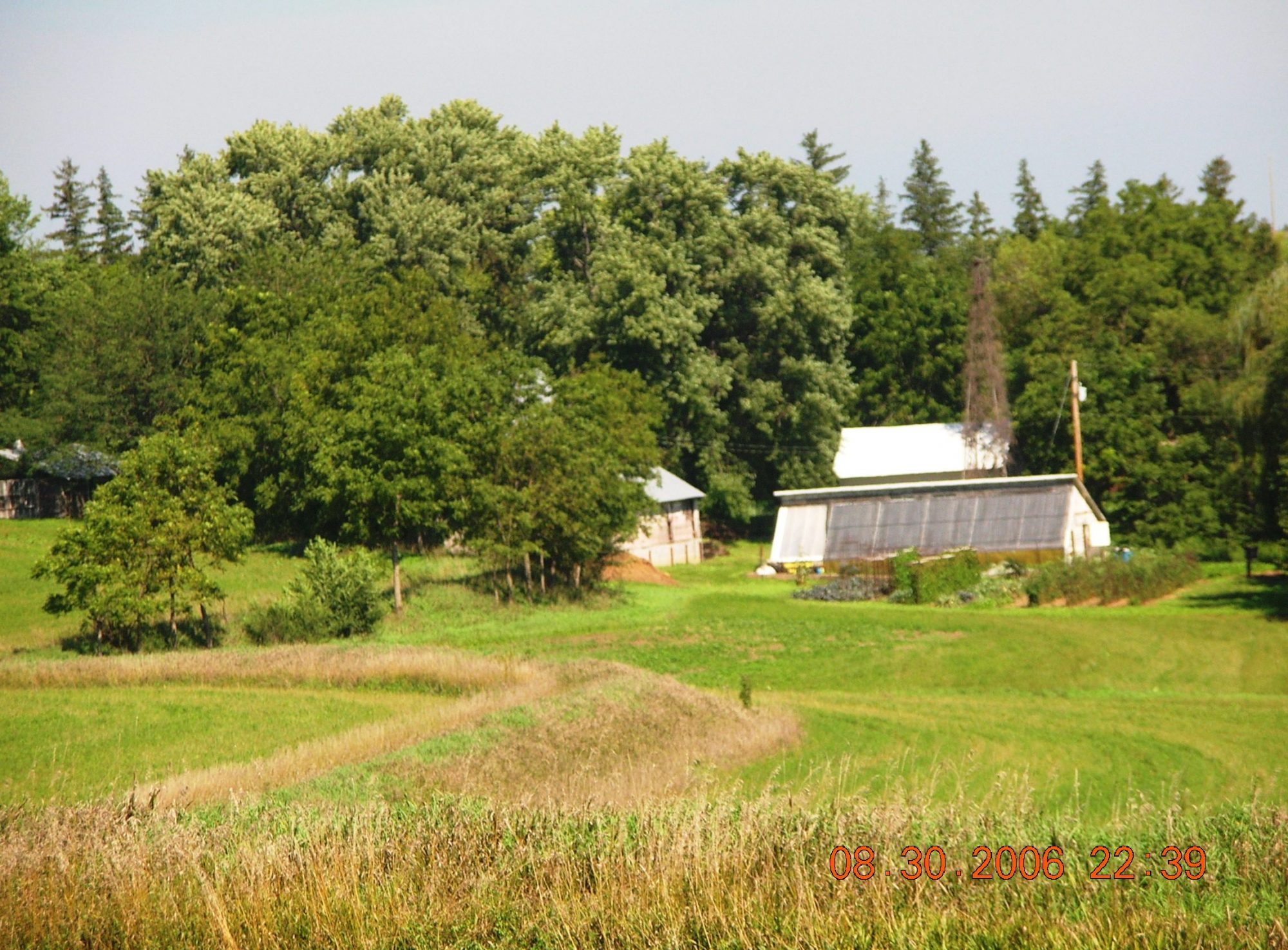
Of the 1.9 million remaining farms in this country, less than 15 percent are profitable. USDA, charts 7 and 8), accessed 1-10-2026.
Starting with our own farms, our company is developing a new business model designed to rebuild farm profits and farm household incomes by organizing landowner controlled regenerative production units.
Production Unit Structure
Our production units will combine contiguous and nearby farms to form a single efficient farm. The goals are to cut costs and increase household incomes from local, regional, and national markets.
Once business plans are completed and financed, each landowner will lease their land directly to one farmer selected by the landowners. In other words, four farms, four separate leases. Without consensus on the farm manager, the production unit cannot be organized.
Our production units will cut costs and build economies-of-scale without buying or selling land and without the need for farm management companies and other intermediaries.
Business plans for these “new farms” will include estimated savings from lower chemical, irrigation, equipment, and labor inputs. Lower unit costs and more volume will position the operators to negotiate better forward contracts for crops and livestock.
Leases will be competitive and production units will include housing for farmers, if needed.
We are inviting landowners and farmers to discuss non-binding planning agreements – at no cost to selected landowners and farmers.
Beef Cattle
Beef cow-calf farmers are at the center of our production unit program. Efficient cow-calf operations with cost-effective crop rotations can reduce input costs from farm chemicals and equipment and increase yields, profits, and household incomes for producers and landowners.
As large ruminants, cattle can make the best use of temporary and long-term pasture in high-yield crop and livestock rotations for high-value markets. To rebuild soil health, yields, and food quality, these rotations may include the judicious use of irrigation with carefully selected farm chemicals and soil additives.
Free Business Plans
Our preliminary planning program is free to selected farmers and landowners. It includes informal meetings with landowners and farmers, preliminary business plans, preliminary selection of production unit managers, along with public and investor meetings.
Farmers and Landowners
Planning starts with informal meetings on converting conventional ground to regenerative methods and on the need for farmer-owned retail food brands. Farm and food industry organizations and local elected officials are being asked to provide meeting space.
If there is sufficient interest, we will start discussions with locally owned feeders and packers and with direct sellers of locally processed beef. The objective is to gather price estimates for selected products based on buyer requirements including volume, quality, and delivery dates. The project will end if landowner interest or buyer demand is weak.
Preliminary Business Plans
Next come preliminary business plans. These plans will include costs to convert conventional crop and cattle operations to regenerative and transitional organic production methods. Plans will include the costs of on-farm housing, local legal and accounting services, and periodic financial reports. Our accounting objective is track costs and income required to increase household incomes from farming.
Each landowner will receive a confidential business plan for her/his farm. Landowners will also receive a plan for their new production unit. The data for the unit plan will come from the individual farm plans and from local market data – without identifying the individual farms. The farm and unit plans will show cost-of-production and income estimates for each crop, and for the beef operation.
Production Unit Managers
Once the preliminary business plans have been approved, our partners will invite experienced farmers to discuss production unit management and marketing. Interested producers will receive business plan summaries. My business partners and I will review qualifications and recommend applicants to the landowners.
Public and Investor Meetings
With preliminary business plans in hand and with our support, landowners and farmers will host public meetings with a goal of attracting local risk capital investors. We must have investors who can sit at the same table with landowners and farmers.
Although conventional and high-value commodity markets are essential to near and midterm profits, building farmer-owned retail food brands for nearby cities is the only available path to new farm profits for most producers. Without brand control, farmers will continue to be price takers in conventional and specialty commodity markets.
Stated differently, well organized production units and risk capital are essential because unorganized landowners and farmers who are already losing money cannot take on more debt to supply high-value commodity markets and build farmer-owned food brands.
Investors can include individuals, private investment organizations, and publicly funded economic development agencies.
ROI for our company and its partners will come from a negotiated share of verified new farm income as determined by audited financial reports to landowners, farmers, and investors.
Contract negotiations will include landowners and farmers (with their local advisors) along with commodity buyers, direct sellers, and investors.
Please contact me to learn more.
Thank you.
Jim Steffen, President
Massena Corporation
402-317-2639
jim@massenafarms.com
Revised: 01-26-2026